Showing posts with label Travel. Show all posts

Wednesday, March 25, 2026

Essential guide for hikers, hunters, and outdoors people

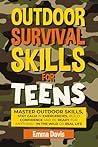
Outdoor Survival Skills For Teens: Master Outdoor Skills, Stay Calm In Emergencies, Build Confidence And Be Ready For Anything—in The Wild Or Real Life (Therapy and Mental Health Books For Teens)Outdoor Survival Skills For Teens: Master Outdoor Skills, Stay Calm In Emergencies, Build Confidence And Be Ready For Anything—in The Wild Or Real Life by Emma Davis
My rating: 5 of 5 stars

Teenagers are full of energy and are always exploring, learning about the world. Some like indoor and technology, while others like to spend time in the great outdoors – hiking in the forests, traversing mountains, camping, etc. These activities are fraught with risks of injury, disease, and even death. It is crucial that anyone intending to explore or spend time outdoors should develop a strong understanding and appreciation of these risks. Learning, training, and practicing the skills learned are essential for survival outdoors.
One way to learn and imbibe these essential traits is by reading Emma Davis’ book titled Outdoor Survival Skills for Teens. Though the 198 page volume is titled and aimed at teens, the knowledge can help people of all ages. Davis, an author with many talents and training including social work, therapy, and financial advice, brings this to join her several books aimed at teenagers. She has written several books on a diverse range of topics including finances, career planning, DBT techniques, among others.
Survival Skills for Teens spans six chapters, preceded by an introduction and followed by an exhaustive reference list. The book teaches readers how to survive in the wilderness, camping skills, and several tips that can be helpful while spending time outdoors. Introducing the book to readers Davis explains that this volume is aimed at teens, adults, and children who not only want to learn how to make a fire, but also how to stay calm if they get lost in the forest. It is for those individuals who want to take calculated risks, be prepared for any eventuality they might face while outside.
My favorite chapter of this book is the one titled “Snack or Poison” in which the author gives a detailed description of foraging while lost in the wilderness. She makes it a point to explain the distinction between edible berries vs poisonous ones, how one can differentiate and prevent catastrophic events. The three tests before you munch section is very useful guide for the first time forager. The box on how poisoning takes effect is very informative too.
Overall I believe the book will prove to be a very useful resource for all those who wish to explore outdoors and be prepared. The information in this volume will not only help teens, but adults alike. I would recommend this book for everyone interested in outdoors, irrespective of age.

View all my reviews

Monday, March 23, 2026

Colorful, informative, detailed, and well-organized travel guide!

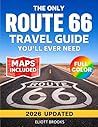
The Only Route 66 Travel Guide You’ll Ever Need (2026-2027): The Complete Full Color Road Trip Planner with Clear Maps, Mile-by-Mile Routes, Must-See Stops & Hidden Gems from Chicago to Santa MonicaThe Only Route 66 Travel Guide You’ll Ever Need (2026-2027): The Complete Full Color Road Trip Planner with Clear Maps, Mile-by-Mile Routes, Must-See Stops & Hidden Gems from Chicago to Santa Monica by Eliott Brooks
My rating: 5 of 5 stars

Established in 1926, Route-66 is one of the most iconic highways that spans eight states traversing over 2,400 miles of beautiful, rugged, and historic territories. Also known as the “mother road” a road trip along this highway presents several unique sightseeing, dining, and adventure opportunities. World famous attractions include The Grand Canyon, Cadillac Ranch, Calico Ghost Town, Santa Monica Pier, Mojave Desert, and several more features in the long list of must-see destinations along this historic highway.
I have travelled parts of Route-66 in bits and pieces over the past decade and half. This year I am planning to traverse the entire route 66 in one stretch while taking on the most important destinations. While researching for a comprehensive guide to carry along on this road trip I chanced upon Eliott Brooks Route 66: The Complete Road Trip Guide, a compact, multi-color, visually appealing, easy to read handbook, that provides excellent trip-planning advise, and information. Laid out in four uniquely different parts the guide covers the history of route 66, trip planning information, the route by state and a complete section on practical information such as places to stay, places to eat, and other important data to avoid pitfalls of most travelers.
This is one of the few guides that I found with high quality images and completely colorful making it very easy to read and understand. Written in simple language, this information rich packed volume is one of the most interesting travel guide I have come across in recent times. Every chapter has practical information including average cost per day to travel this road, what kind of clothing to pack, when to travel, and practical road tips.
As I read the book I am quite appreciative of the amount of research that has gone to cover almost all aspects of the 2,400 mile journey with an almost mile-by-mile breakdown. The attention to detail is quite obvious when one sees small inconspicuous diners mentioned along with globally famous attractions. Then of course the 2026-27 updates which acts like a lifeline for all travelers is going to be very useful. A great resource to plan and implement your favorite road trip to span route 66.

View all my reviews

Tuesday, May 4, 2010

Book Review : The Routes of Man

A unique travelogue!!!
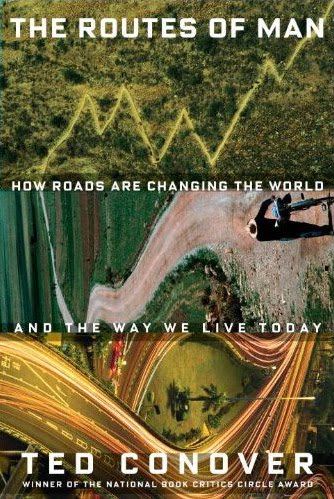
The Routes of Man I first heard about this book on the local NPR station KERA. The author Ted Conover was being quizzed about the book's content and his experiences while compiling the book. I felt interested when I heard that the author had traveled to almost every significant nook and corner of the globe to get the data, pictures, and information about the roads he was writing about.

This is a travelogue of an individual who loves the road and explores the culture, society, economy and other aspects that make or mar the road. I am still reading it... in fact I just started and have completed the first few chapters of the 333 page volume.

Initially along I haven't liked facet of his writing, he refers to Native American tribes as Indians, which in my opinion is grossly wrong. I promptly wrote a protest note to the author and he responded in a cheeky manner that these people referred to themselves as "Indians" and that he didn't want to correct them. I don't see the reclaiming Indian identity as his duty but in my opinion he owes the world in general and particularly people from India that much that his words should not reflect that the Native American Tribes are Indians. He could quote some member of a Native American tribe as saying "We are Indians..." or whatever... but him writing... simply not done...

Will post something more once I complete the book pretty soon I guess, because it is an easy and interesting read.

Thursday, October 1, 2009

Book Review: Long Way Round – Chasing Shadows across the World

Saga of Motorcycle Adventure
Long Way Round – Chasing Shadows across the World by Ewan McGregor and Charley Boorman; TimeWarner books; 312 pp

There is something about Men and Motorcycles, it is a fatal attraction that refuses to die out with age. An infatuation which remains for ever. The two-wheeled steed attracts the man like flowers attract a bee. Sometimes this attraction is a stronger draw than that of the female species. During the recent past there have been a handful of women who have been bitten by the two-wheeled bug and adventure travel insect. But still it is more common to see men strapping up their things, gassing up their motorcycles and heading out into the wild to explore the world. The book under review Long Way Round tells the story of two such men who despite being famous Hollywood stars decide to break away and live their passions.

Long Way Round (LWR) by UK-based Hollywood actors and motorcycle aficionados Ewan McGregor and Charley Boorman also available as a movie in DVD, is a first-hand account of an ambitious motorcycle odyssey across the world from London to New York through Europe, Asia and North America. Presented as a diary of events recorded before, during and after the journey by the two actors, LWR is distinguishable from normative travelogues and its technique of interplaying both stars’ varying experiences and feelings as they hit roads and adventure around the world, is quite appealing.

Comprising 12 chapters, two appendices and interspersed with maps and glossy colour pictures of fascinating locales, LWR chronicles the duo’s experiences, observations and ruminations as they journey across Europe, Ukraine, Kazakhstan, Mongolia, Russia, across Bering Straits into Alaska, down through Canada, finally ending back home in the US.

Some of their notable easy rider style escapades include being chased by paparazzi in Kazakhstan, being accosted by gun-toting militia in Ukraine, harassed by the police everywhere and served bulls’ testicles for supper by Mongolian nomads. And yet despite all trials and tribulations they sped over 20,000 miles (35,000 km) in four months, a journey which according to the authors has changed their lives forever. Despite exhaustion and round-the-clock excitement, the authors have meticulously documented, photographed and video shot their encounters and experiences and produced a highly entertaining travelogue in two media.

On the down side McGregor’s endless whining about being away from his wife and kids is annoying. On a round-the-world journey anyone would miss his family, and surely there’s no need to harp on this theme in almost every chapter of the book.

LWR is especially invigorating for dyed-in-the-wool biking buffs in India, most of whom dream of hitting the road and circumnavigating the world. The authors’ can-do determination to traverse tarmac, stones, mud, water and often barely discernable paths to attain their mission is admirable. It drives home the point that beyond romantic notions of inter-continental road travel, great journeys require substantial reserves of perseverance, determination and guts-and-glory hard slog. The actor duo repeatedly detail experiences of common folk who didn’t have a clue of their star status spontaneously coming forward to help them. It’s enough to restore one’s faith in humanity and the brotherhood of man.

Tuesday, September 29, 2009

Book Review: Worldwide Multilingual Phrase Book

Language guide for foreign travelers
Worldwide Multilingual Phrase Book; by Eric Dondero Rittberg; Portside Language Service; Price: $12.50; 248 pp

The Indian economy recently attained a historic landmark when its foreign exchange surplus crossed the $100 billion mark. This is largely the result of the massive growth of industry and business especially in the IT and other technology areas in the post-liberalisation era. Globalisation has also opened up a host of new opportunities for the hitherto shackled Indian industry. The bad old days of foreign exchange licenses are just a bad memory and a large – and growing number of businessmen, tourists and students are travelling abroad to discover new and lucrative trade opportunities and open up new markets. Conversely, the number of foreign investors visiting India’s tech-savvy cities and business centres is multiplying by the day.

A pre-requisite of transacting business is adequate language and communication skills – not only in English but also in the other languages spoken around the world. Without basic language and communication skills it is difficult to converse, argue, discuss, convince or close big or small business deals. But how does one learn a new language and converse with ease in a short span of time? Traditional learning systems require months – even years – to learn and master a language. But with new and innovative techniques and publications like Eric Dondero Rittberg’s Worldwide Multilingual Phrase Book learning the basic phrases of 40 languages has become easy.

The best thing about the Worldwide Multilingual Phrase Book (WMPB) is its compact size. Printed in a easy-to-carry pocket-book format, this 248-page volume is packed with commonly used phrases in over 40 different languages with verbatim translations into English, presented in an easy-to-read and easy-to-grasp fashion. The languages covered in the book vary from Spanish to Greek; Swahili to Cantonese and Vietnamese to Yoruba (West Africa) and Bulgarian to Gaelic (Ireland) among others, and offers an excellent introduction to over 40 languages from across the world. Indeed WMPB is an essential companion for globetrotting businessmen as also for the growing number of outbound leisure travelers from the subcontinent.

A widely-travelled US-based linguist-cum-interpreter and certified language instructor, Rittberg who has also authored Vacation Spanish; Fast Spanish and Fast Chinese is well-qualified to write this useful companion guide. It offers valuable tips on how to master the basics and converse in a foreign language. Hardly surprising that he is a language-learning aficionado speaks in many tongues including: Spanish, Italian, French, Portuguese, German, Russian, Arabic, Chinese, Japanese, Filipino, Greek, Swahili and Dutch. A political science alumnus of the Florida State University, Rittberg has travelled to more than 25 countries including India, China, Japan, Korea among others.

The book comprises 16 sections: Preface; The Latin languages; The Germanic Languages; The Slavic Languages; Finno-Ugric; Greek; Turkic; Semitic; African; Indo-Persian; Chinese; East Asian; Southeast Asian; Austornesian; Other Really Exotic Languages and Further Language ending with a brief autobiography of the author. Plus a bonus chapter on great web sites and tips for further language learning.

Indeed the striking characteristic or unique selling proposition of this useful companion handbook is its easy-to-use structure. Each section is further divided into numerous one to many page sub-sections, explaining different techniques and tips on building language-learning skills. Historically or culturally connected language are grouped together and common phrases provided are adequate to help in nearly every situation a visitor to foreign shores is likely to be confronted with. A note on grammar, followed by a set of basic phrases, key propositions, numbers, general, extra and special vocabulary, makes the process of learning a language simple and easy. But inevitably while most European and American languages are dealt with in detail the African and Asian languages are not. These sections however are packed with information on the country, regional and cultural aspects of the language followed by a list of commonly used phrases.

Though the book addresses the needs and situations in which globe-trotting American businessmen are likely to encounter, it is likely to prove very useful to the local Indian and other businessmen as well. “We want it quick, easy and most importantly, we want it all now,” says Rittberg delineating about the expectations of the new genre of peripatetic businessmen. “For those who want to learn a language fluently, there is more than a sufficient amount of material available at the bookstores, libraries and on-line. However, for those Americans who have no time to obtain fluency and who just want to learn some basics for a variety of languages, there are little if any materials available all in one source,” says Rittberg “The purpose of this phase book is to teach individuals the basics of essential words and phrases for a variety of different languages from around the world.”

The objective is sufficiently realized by WMPB. It’s an excellent resource for every traveler going abroad. With this handbook ready, the traveler need not worry about being able to communicate in another language.

Boa viagem!


Reblog this post [with Zemanta]

Saturday, September 26, 2009

Book Review: Travel Wisdom

Utilitarian Compendium
Travel Wisdom by Lynne and Hank Christen; Aventine Press; Price: Rs.582; 251pp

Cover of "Travel Wisdom: Tips, Tools, and...Cover via Amazon

By common consensus the world’s largest and most high-potential industry is travel and tourism. Its worldwide revenue is estimated at $ 4 trillion (Rs.180,00,000 crore) (2002-03). And with India’s showing in popular travel destinations surveys improving by leaps and bounds, this continent-sized nation is all-set to grab a large slice of this huge and growing global tourism market. In October 2003 the ‘land of sadhus and saris’ was ranked among the top ten preferred tourism destinations in a survey by the UK-based Conde Nast travel magazine. Recently (February 2004) India hosted its first-ever international travel and tourism seminar-cum-exhibition – World Travel India 2004 – in Mumbai which drew enthusiastic participants from around the world.

With travel made easier thanks to the plethora of package (adventure, heritage, cultural, and historical) tours and discount deals, there is no stopping the newly liberated Indian traveller. But travel especially across the dreaded Kala pani has its own pitfalls. With the ‘war on terror’ in full swing, the new world traveller has to face innumerable checks and verifications. And as if this isn’t enough there is a mountain of groundwork – visas, reservations, itinerary planning, health and security clearances to contend with. Contemporary holidays are short duration, intensive experiences in which even a minor slip-up could prove frustrating and expensive.

Against this backdrop comes Travel Wisdom, a comprehensive how-to-do-it-yourself guidebook by the extensively travelled US-based couple Lynne and Hank Christen. This book is the outcome of the Christens’ travel experiences spread over two decades and 43 countries. “Our goals for this book are two-fold. First, we want to inspire you to turn your travel dreams into reality. Second we want to share the practical tips, tools, and tactics we have acquired through our own travel experiences and research,” say the authors in the introduction of the book.

True to its promise Travel Wisdom is a useful, practical and hands-on guide for those interested in making their money go the extra mile. Well-organised into 18 chapters, three appendices and topped off with an index, this utilitarian compendium covers almost every imaginable aspect of travel. The very first chapter titled ‘It all begins with a dream and plan’ which provides tips on how to get started on planning a journey, is sequentially followed by others offering practical travel advice: ‘Packing smart’; ‘Choosing a travel agent’; ‘The dollars and sense of travel’; ‘Travel health and safety’; ‘Minding your travel manners’; ‘Taking care of business’; ‘The disabled traveller’; ‘Going solo’; ‘Baby makes three, or four, or more’; ‘Pros and cons of group tours’; ‘Smooth sailing’; ‘Airs above the ground’; Riding the rails’; ‘Highways and by-ways’; ‘Vacationing at home’; ‘When things go wrong’; and ‘Making the memories last’.

Chapters which are likely to prove useful to the new generation of outward bound Indian tourists unshackled from the ancient regime under which foreign exchange was always ‘precious’ are ‘Travel health and safety’ which includes a sub-chapter on being street smart and ‘Minding your travel manners’ which is particularly valuable for Indian tourists who have already acquired a reputation for loud boorishness. Among the basic do’s and don’ts: Make the time to learn about your destination; respect local languages and customs; think before you speak; dress appropriately; practice good photo etiquette; go easy on smoking, chewing gum and cell phones, beware of sign language.

Another useful chapter is the ‘The dollars sense of travel’ which advises travelers how to get the most out of their hard earned savings and holiday budgets. It offers valuable tips on how to divide and carry your money in various forms: cash, travelers’ checks, ATM/ debit cards, credit cards etc and precautions to be taken while using ATM/ debit and credit cards.

Travel Wisdom also contains a useful appendix section providing checklists for planning your travel. The comprehensive checklists detail what you should start doing as early as six months prior to departure. Included is a list of online travel resources; sample packing list for women and men and other travel necessary accessories.

Though Travel Wisdom is an unabashedly ‘how to’ book, it’s a useful guide especially for first time travelers who might be blowing several years’ savings on a once-in-a-lifetime foreign holiday. Sidebars provide valuable insights, travel homework, travel experiences and amusing anecdotes and experiences which combine to make this how-to book lively and interesting. Though this guide seems to be targeted at the middle-aged business and leisure tourists, it’s also useful for younger tourists.

Reblog this post [with Zemanta]

Monday, September 21, 2009

Book Review: What! Me Travel?

Useful Primer
What! Me Travel? by Dan Rosendahl a.k.a. Traveldan; Frontage Publishing; Price: Rs.938; 284 pp

By common consensus the world’s largest and most high-potential industry is travel and
tourism. Last year (2002-03) 715 million people across the world spent US$4 trillion (Rs.19,200,000 crore) travelling across continents for reasons varying from business and education to leisure and health. France was the most popular destination, with 76.7 million tourists visiting the country. Spain came second (51.7 million) followed by the United States (45.4 million) in the tourism destination popularity chart. Italy, China and Britain were other popular choices.
In sharp contrast and despite its huge size (3,287,590 sq. km and mountains, hill stations, beach resorts and historic sites galore), India attracted a mere 2.5 million foreign visitors. But fortunately for the country, the domestic tourism industry is booming. A massive number of 60 million citizens travelled for business and pleasure within national borders. This despite a pathetic road infrastructure, chaotic and accident-prone trains and inflated airfares. But the some good news for the Indian traveller who wants to hit the road is the Union government’s ‘Golden Quadrilateral’ project (an estimated road network of 14,850 km, across the length and breadth of the country is being constructed at a cost of Rs.54,000 crore), slated for completion in 2007.
Though with mushrooming travel agencies, introduction of package tours and deals, online train reservation and the growth of the internet, travel has become much easier, the pitfalls have also multiplied commensurately. There is a mountain of groundwork – visas, reservations, itinerary planning, health and security clearances to contend with. With holidays having transformed into short duration, intensive experiences a small slip-up could prove ruinously expensive. What! Me Travel? by Dan Rosendahl a.k.a TravelDan is a travel guide which offers advice on the dos and don’ts of travel.
In this book, the best-selling US-based travel consultant Dan Rosendahl who has also authored 20,000 Vacations and The Good, Bad and Weirdest Places to Stay, following his bestseller 10,000 Vacations (1996) offers valuable advice on how to plan a holiday from scratch, how to clinch value-for-money deals and how to most enjoy your destination once you get there. The book comprises four sections: ‘Ten Commandments of Travel’ (Use common sense; know when and where; ask questions first; reserve after you decide; buy from someone you like; be a travel hero; keep your sense of humour; use a credit card), ‘Going, Going, Going’ (Trip Attack; travel agents and their ilk), ‘I’m There’ (Upon arrival; sight seeing; well fed; health is wealth; the dangers) and ‘Appendices’ (The 30 types of travellers; travel reservation helper; simple truths; the history of TravelDan; best country guide). Such a step-by-step travel guide is useful for novice and intermediate tourists as well as experienced travellers.
Unlike the usual travel guide, What! Me Travel? doesn’t tell you what to see, but how to make sure you get to your chosen destination smoothly and how to make the most of the experience. Therefore it’s a general rather than a destination-specific guide. Each chapter offers useful tips on saving time and money gathered by the author from years of experience in the travel industry and personal travel experiences.
The introduction titled ‘A subdued introduction or The Zen of Psycho-travel’ divides holidays into four different types: the weekend getaway (WEG), the vacation, the holiday and travelling. The distinctive character of each is described in detail so that the reader can choose the type that suits him best.
Each of the four sections of the book dwells upon a different facet of travel, viz, Section I: ‘The Ten Commandments of Travel’ advises the reader on how to start planning and researching for a dream holiday. Section II: ‘Going, Going, Going!’ contains information relating to different travel options (road, rail, sea, air), how to deal with travel agents, etc. Section III titled ‘I’m There’ tells you how to enjoy your trip once you are on the road, what to do on arrival, how to bargain to get the best deal, what to eat, how to take care of your health etc. Section IV titled ‘Appendices’ explains the jargon of the travel trade, describes 30 different types of travellers, is a travel reservation helper and also includes a biography of the author.
Unlike the many destination-specific travel books which crowd the bookstore shelves, this zanily written travel book offers a one-stop guide to travellers with clear instructions, referrals and amusing examples.
The book though well written and packed with hard information on budget travel, is too US-specific, with most of the website referrals catering to American travellers. But that doesn’t diminish its international appeal.
It is a useful primer as well for a first time traveller in the subcontinent who has been shackled to home and hearth for the past five decades by the chronic scarcity of “precious foreign exchange” and the perpetual scarcities created by the monopoly Indian Airlines and Indian Railways. Suddenly after the economic liberalisation initiative of 1991, the 50-year-old foreign exchange scarcity has been transformed into an embarrassing $80 billion surplus, and computerisation of reservation systems supplemented by the automobile revolution has boosted domestic travel. For such recently unshackled and enthusiastic new generation tourists, this is a particularly useful book.
It’ll get you more bang for your buck!
Monday, August 31, 2009

Book Review: 500 Places to see before they disappear

500 Places to See Before They Disappear by Holly Hughes and Larry West; Wiley Publishing Inc; Price: $19.99; 472 pp.

Global warming, climate change, deforestation, destruction of natural habitats, reduction of national park areas and melting glaciers etc are causing great changes in the way we have known the earth to be. When one reads the title of this book it would be tough to imagine that there could places on the earth which could disappear, but the unfortunate truth is that there are many more than 500 places which are in danger of disappearance due to various man-made reasons. 500 Places to See Before They Disappear is a compilation of the information on the world's most fragile wonders.

At the face on might get the impression that this book contains information about forests, glaciers, mountains, lakes and other natural places, but this volume has information about man-made wonders too. “Though this book was originally conceived as a handbook for eco-tourists, it soon became clear that we couldn’t separate natural and man-made attractions. After all, historical and cultural landmarks are part of the environment, too. If changes in the natural environment have threatened the piping plover, the Tasmanian devil and the mountain gorilla, so too have changes in our cultural environment threatened classic amusement parks, ballparks and movie palaces. Our planet is poorer every time we allow something to die,” writes Holly Hughes, the New York-based globally traveled editor and writer who has also written fiction and also edits the annual Best Food Writing anthology.

From Canada to Chile, Russia to Africa and India to Japan, 500 Places to See Before They Disappear has information about numerous locations which are suffering from the onslaught of modern development. This volume enables passionate travelers and eco-conscious individuals to learn about and plan a visit to see rare cultural, historic, and natural places before they are get permanently, irreversibly changed or disappear. These include exotic landscapes, fragile ecosystems, rare animal, bird and big game habitats, cityscapes, vanishing cultural kitsch, petroglyphs, and more.

500 Places to See Before They Disappear is ideal for school and university libraries where young students can access information about the changes that are taking place in locations across the world and the natural and man-made heritage we are slowly but surely losing.

When I saw the book my first interest was to check out how many places in India are listed in the volume. After reading the book I am quite shocked to note that 19 places in India are in danger of disappearing completely. These include the world heritage sites of Ajanta Caves, Bharatpur Bird Sanctuary, Chilika Lake Bird Sanctuary, the Great Stupa of Sanchi, Rock shelters of Bhimbetka, Sundarbans National Park, Taj Mahal, Temples of Khajuraho and the Valley of Flowers of National park.

Each fast-disappearing location has been profiled in great detail along with pictures and accounts on its history, nature of the threat it is facing, and why it’s been included. And of course there is quite a bit of brief practical information on how to visit, and what visitors can to do protect it. The easy-to-use geographical index at the end of the book makes reading the book all the more easier. This index helps travelers locate attractions in and around the locations they are traveling to.

There is a definite US spin to the endangered places featured in the volume. The places in the US are listed as per their geographical location. There are seven endangered sites in Texas including the Aransas National Wildlife Refuge, Caddo Lake State Park and Houston Astrodome. 500 Places to See Before They Disappear is doing a great public service by bringing these places to the notice of everyone so that people could take steps to extend their life and prevent them from disappearing fast.

Reblog this post [with Zemanta]

Wednesday, June 17, 2009

Book Review: Ride Guide to America

With nothing much to do, all that I have been doing is reading and writing. Reading books from the fantastic public library nearby, the Dallas Morning News newspaper which gets delivered every day, books which are at home. And we definitely have a real good collection. Well being a roadie it is hardly surprising that my first choice would be books related to two wheels or to the road. And this is one book which I had read earlier when I was in India and now I thought I'd read it again and hence downloaded a softcopy from the internet and devoured it within a few days.

Here is an abridged version or rather should I say version written with better understanding of the wide and long roads of America. The original review was published in EducationWorld way back in August 2007.

One thing I have noticed in America, unlike India where motorcycle is the major mode of transport, here it is a tool of indulgence and entertainment. It is easier to get a license to drive a car than ride a motorcycle. Perils of motorcycle riding are much more on American highways than on Indian roads. Then the extreme weather conditions of this large country make it almost impossible to ride motorcycles throughout the year. Hence motorcycles are largely a mode of entertainment, fun and enjoyment. People ride motorcycles because they LOVE TO RIDE and not because they can't afford a car.

In such a scenario a book like the AMA's Ride Guide to America (RGA) is very vital for motorcycle afficionados of this country. Americans are very much accustomed to travelling with high-tech gadgetry, including maps, GPS receivers, two-way radios, etc. And this book rightly features over 200 pages of information about best motorcycling trails in the the world's largest motorcycling nation. From California to New England, Rocky Mountain High to Texas, RGA informs readers about the most rider-friendly roads and highways in a country whose population has worked hard and put in place what is perhaps the world's best road networks.

One of the best features of this compilation is its detailed maps and point-to-point outlines for each of the 36 excursions recommended. These proposed rides across the US offer bikers challenging trails along scenic shorelines, mountainous terrain and into deep valleys and deserts. All excursions are illustrated with high-quality, full-colour photographs. RGA's 40 detailed, topographic road maps are a great boon to riders as their steeds run across the recommended routes. The riders can plan and anticipate the terrain they'll encounter in the Pacific Northwest, California, Rocky Mountains and the Southwest, Texas, the Appalachians and the mid-Atlantic, and New England.

Admittedly RGA is of limited utility considering its geographical coverage limitation. But perhaps the most exotic roads and rides of America are hidden in these states featured in the RGA. This book is definitely one that entices wannabe road warriors to saddle up and experience America's amazing highways. The chapters titled 'Loaded for the Road: How to carry stuff on your motorcycle' and 'Ride smart: Tips for street survival' are particularly recommended for bikers who should look into safety measures before embarking on a road trip especially on the highways of America. These chapters discuss and differentiate various types of backpacks, tank bags, rear-seat bags, saddle bags and other motorcycle paraphernalia useful for long distance, cross country bikers everywhere. Neatly sub-divided into six sections based on the regions of the US, RGA also contains a compilation of travel articles published in the American Motorcyclist, written by experienced bikers for bikers.

My favourite in the book is the section on a biking excursion on the Big Sur Highway through the rugged Rocky Mountains and down into Texas hill country. The route like all others in the book, is brought to life with attractive colour photographs and evocative descriptions. Currently in Texas I hope to make it to this highway in summer, if not on a bike, at least in our trusty Saturn 4-wheeled elephant.

But for now, I have finished reading the book and also sharing my views on this, hopefully, if any bikers are reading this they will leave some comments about the review.